Ever wondered how some companies effortlessly scale their customer relationships? The secret might lie in a PLG based CRM—a game-changer blending product-led growth with smart customer management.
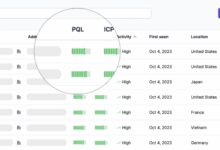
What Is a PLG Based CRM?

A PLG based CRM merges the principles of Product-Led Growth (PLG) with Customer Relationship Management (CRM) systems. Unlike traditional CRMs that rely heavily on sales teams to drive adoption, a PLG based CRM empowers users to discover, adopt, and expand their usage directly through the product experience. This model shifts the focus from outbound sales to in-product engagement, making the product itself the primary driver of customer acquisition, retention, and expansion.
Defining Product-Led Growth (PLG)
Product-Led Growth is a go-to-market strategy where the product is the main vehicle for customer acquisition, conversion, and expansion. Instead of relying on sales demos or marketing funnels, companies let users experience the product firsthand—often through free trials, freemium models, or self-serve signups. According to ProductLed, organizations embracing PLG grow 2–3x faster than those using traditional sales-led models.
- User-centric design is at the core of PLG.
- Frictionless onboarding accelerates time-to-value.
- Data-driven insights guide product improvements.
How CRM Fits Into the PLG Model
Traditional CRM systems like Salesforce or HubSpot are built for sales teams to track leads, manage pipelines, and forecast revenue. However, in a PLG based CRM, the system evolves to support user behavior tracking, feature adoption analytics, and automated engagement—all within the product environment. This integration allows companies to identify power users, predict churn, and trigger personalized in-app messages without human intervention.
“The future of CRM isn’t just about managing contacts—it’s about understanding user behavior and acting on it in real time.” — Product Growth Strategist, SaaS Insights Report 2023
Why PLG Based CRM Is Revolutionizing SaaS
The rise of SaaS has fundamentally changed how businesses interact with software. Customers now expect instant access, intuitive interfaces, and immediate value—all without talking to a salesperson. A PLG based CRM meets these expectations by aligning customer success with product usage. It’s not just a tool for sales; it’s a strategic asset for scaling user engagement and reducing dependency on high-touch sales models.
Shift from Sales-Led to Product-Led Models
Sales-led models require significant investment in BDRs, SDRs, and account executives. In contrast, PLG based CRM enables companies to scale with lower customer acquisition costs (CAC). For example, companies like Slack and Notion grew to millions of users before deploying large sales teams. Their CRM systems were designed to capture user behavior and trigger automated workflows based on product interactions.
- Sales-led models focus on lead conversion.
- PLG based CRM focuses on user activation and retention.
- Hybrid models combine both for enterprise upsells.
Reducing Friction in Customer Journeys
One of the biggest advantages of a PLG based CRM is its ability to minimize friction throughout the customer journey. From signup to onboarding, feature discovery, and renewal, every step is optimized based on real-time data. For instance, if a user skips a key onboarding step, the CRM can trigger an in-app tooltip or email sequence to guide them back. This proactive approach increases activation rates and reduces drop-offs.
Core Features of a PLG Based CRM
Not all CRMs are built the same. A true PLG based CRM includes specific features that support self-serve growth, behavioral tracking, and automated engagement. These features differentiate it from legacy systems designed for sales pipelines.
User Behavior Tracking and Analytics
At the heart of any PLG based CRM is robust user behavior tracking. This includes monitoring logins, feature usage, session duration, and key event completions (e.g., inviting team members, upgrading plans). Tools like Mixpanel and Amplitude integrate seamlessly with CRM platforms to provide deep insights into user journeys.
- Event-based tracking captures micro-interactions.
- Cohort analysis identifies high-value user segments.
- Funnels reveal drop-off points in onboarding.
Automated Engagement Workflows
Automation is key to scaling a PLG strategy. A PLG based CRM uses triggers and actions to deliver personalized messages across channels—email, in-app modals, push notifications—based on user behavior. For example, if a user reaches a usage threshold, the system can automatically send a message offering a premium upgrade.
“Automation isn’t about replacing humans—it’s about empowering them to focus on high-impact tasks.” — TechCrunch, 2022
Self-Serve Onboarding and Support
Unlike traditional CRMs that rely on customer success managers, a PLG based CRM enables users to onboard themselves. Interactive walkthroughs, knowledge bases, and AI-powered chatbots guide users through setup and troubleshooting. This reduces support tickets and accelerates time-to-value, which is critical for retention.
Top PLG Based CRM Platforms in 2024
Several platforms now offer CRM capabilities tailored for product-led companies. These tools go beyond contact management to deliver insights into user engagement, churn risk, and expansion opportunities.
HubSpot with PLG Add-Ons
While HubSpot started as a marketing and sales CRM, it has evolved to support PLG strategies through integrations with tools like Pendo and Userpilot. Its operations hub allows teams to sync product data with CRM records, enabling segmentation based on usage patterns.
- Free tier available for startups.
- Strong automation and email workflows.
- Integrates with product analytics tools.
ActiveCampaign for Behavioral CRM
ActiveCampaign combines CRM, marketing automation, and sales automation in one platform. Its site tracking and event-triggered campaigns make it ideal for PLG companies looking to personalize user journeys. For example, if a user views a pricing page three times, ActiveCampaign can trigger a targeted email with a discount offer.
- Advanced behavioral triggers.
- Dynamic content personalization.
- Affordable for mid-market SaaS.
Customer.io for Product-Led Messaging
Customer.io specializes in behavioral messaging for PLG companies. It connects directly to your product database and allows you to create campaigns based on user actions. Whether it’s a welcome series for new signups or a re-engagement campaign for inactive users, Customer.io makes it easy to act on product data.
“We reduced churn by 22% in three months using Customer.io’s behavioral triggers.” — CMO, SaaS Startup
How to Implement a PLG Based CRM Strategy
Adopting a PLG based CRM isn’t just about choosing the right tool—it’s about rethinking your entire customer lifecycle. Implementation requires alignment across product, marketing, sales, and customer success teams.
Map the User Journey First
Before integrating any CRM, map out the ideal user journey from awareness to advocacy. Identify key milestones such as activation, adoption, and expansion. Use this map to define what data you need to track and when to engage users. For example, Day 1 might focus on completing onboarding, while Day 7 targets feature discovery.
- Define activation metrics (e.g., first project created).
- Identify expansion triggers (e.g., team invite sent).
- Set churn risk indicators (e.g., 7-day inactivity).
Integrate Product Data with CRM
A PLG based CRM is only as good as the data it receives. Use APIs or tools like Segment to stream product events into your CRM. This ensures that every user interaction—clicks, searches, upgrades—is captured and used to inform engagement strategies. For example, Salesforce can be enhanced with MuleSoft to pull in real-time usage data.
Train Teams on Behavior-Driven Engagement
Transitioning to a PLG based CRM requires cultural change. Sales teams must shift from cold outreach to supporting activated users. Customer success teams should focus on proactive guidance rather than reactive support. Training programs should emphasize data literacy and empathy for user behavior.
Measuring Success with a PLG Based CRM
Success in a PLG model isn’t measured by leads or demos—it’s measured by user engagement, retention, and expansion. A PLG based CRM provides the metrics to track these KPIs accurately.
Key Metrics to Monitor
Unlike traditional CRM dashboards that highlight sales pipeline value, a PLG based CRM focuses on product-driven metrics:
- Activation Rate: Percentage of users who complete key onboarding steps.
- Feature Adoption: How many users are using core features?
- Net Revenue Retention (NRR): Measures expansion and churn combined.
- Time-to-Value: How quickly do users achieve their first win?
Using Dashboards for Real-Time Insights
Modern PLG based CRM platforms offer customizable dashboards that visualize user health scores, churn risk, and expansion potential. These dashboards help teams make faster decisions. For example, a sudden drop in login frequency might trigger a re-engagement campaign before the user cancels.
“Data is the new sales rep in a PLG world.” — OpenView Partners, 2023 State of PLG Report
Challenges and Pitfalls of PLG Based CRM
While powerful, a PLG based CRM isn’t without challenges. Companies often underestimate the complexity of data integration, team alignment, and user privacy.
Data Silos and Integration Complexity
One of the biggest hurdles is breaking down data silos between product, marketing, and sales. Without a unified data layer, your PLG based CRM may lack the full picture of user behavior. Investing in a Customer Data Platform (CDP) like Segment or RudderStack can help centralize data from multiple sources.
- Legacy systems resist integration.
- Engineering resources are often stretched.
- Real-time syncing requires robust infrastructure.
Over-Automation and User Fatigue
While automation is essential, too many messages can overwhelm users. A poorly configured PLG based CRM might send five emails in one day, leading to unsubscribes or negative brand perception. Best practice: use frequency capping and preference centers to let users control communication.
Privacy and Compliance Risks
Tracking user behavior raises GDPR, CCPA, and other compliance concerns. A PLG based CRM must include consent management and data anonymization features. Always inform users about data collection and provide opt-out options.
Future Trends in PLG Based CRM
The evolution of CRM is far from over. As AI, machine learning, and predictive analytics advance, PLG based CRM systems will become even more intelligent and proactive.
AI-Powered Predictive Engagement
Future PLG based CRM platforms will use AI to predict which users are likely to churn or upgrade. For example, if a user’s activity drops by 40% over two weeks, the system could automatically assign them to a high-risk cohort and trigger a personalized win-back campaign.
- Predictive scoring replaces manual segmentation.
- NLP-driven chatbots handle complex queries.
- Generative AI drafts personalized emails.
Hyper-Personalization at Scale
Next-gen PLG based CRM will deliver hyper-personalized experiences based on user roles, industry, and usage patterns. Imagine a CRM that knows a user is a marketing manager in a fintech startup and automatically surfaces relevant templates and success stories.
Embedded CRM Experiences
Instead of separate CRM dashboards, future systems will embed insights directly into the product interface. Sales reps might see a user’s health score while viewing their account, or customer success managers could access engagement history without leaving the app.
What is a PLG based CRM?
A PLG based CRM is a customer relationship management system designed to support Product-Led Growth strategies. It integrates user behavior data from the product into the CRM to drive automated, personalized engagement and reduce reliance on sales teams.
How does a PLG based CRM differ from traditional CRM?
Traditional CRM focuses on managing sales pipelines and lead interactions. A PLG based CRM focuses on user behavior, product adoption, and automated engagement, making the product the primary growth engine.
Which companies benefit most from a PLG based CRM?
SaaS companies with self-serve models, freemium tiers, or low-touch onboarding benefit most. Examples include Notion, Calendly, and Zapier.
Can a PLG based CRM work for enterprise sales?
Yes. Many PLG companies use a hybrid model: users start self-serving, and once they reach a certain usage threshold, a sales rep engages for enterprise upsells. The PLG based CRM identifies these expansion opportunities.
What are the best tools for building a PLG based CRM?
Popular tools include HubSpot (with integrations), ActiveCampaign, Customer.io, and specialized platforms like Pendo and Totango that combine CRM with product analytics.
Adopting a PLG based CRM is no longer optional for modern SaaS companies—it’s essential. By aligning customer relationship management with product usage, businesses can scale efficiently, reduce churn, and unlock organic growth. The future belongs to companies that let their product lead the way, supported by intelligent, data-driven CRM systems that understand users better than ever before.
Further Reading:
